
Health Conditions
Living with Sciatica
Sciatica can be painful, frustrating and unpredictable.
For some people, it begins suddenly after lifting something heavy or an awkward movement. For others, it develops gradually. Pain may travel from the lower back into the buttock and down the leg, sometimes accompanied by tingling, numbness or weakness.
During a flare-up, even simple activities such as walking, sitting or getting out of bed can become uncomfortable.
Although movement may feel daunting, gentle activity is often an important part of recovery. Tai Chi and Qi Gong provide a calm, adaptable way of keeping the body moving while working within your own comfort.
Understanding Sciatica
Sciatica isn’t a condition in itself but a collection of symptoms caused by irritation or compression of the sciatic nerve.
Common causes include:
- a slipped (herniated) disc
- age-related changes in the spine
- spinal stenosis
- muscle tightness around the nerve
- inflammation
For many people, symptoms improve over time with appropriate treatment and self-management.
If you experience severe weakness, loss of bladder or bowel control, or numbness around the saddle area, seek urgent medical attention as these can be signs of a medical emergency.

Why Gentle Movement Matters
When movement causes pain, it’s natural to become cautious.
However, remaining completely inactive can sometimes lead to increased stiffness, muscle weakness and reduced confidence.
Current guidance generally encourages people with sciatica to stay as active as they comfortably can, gradually returning to normal activities as symptoms improve.
The aim isn’t to push through pain but to find movements that feel manageable and support recovery.
How Tai Chi and Qi Gong May Help
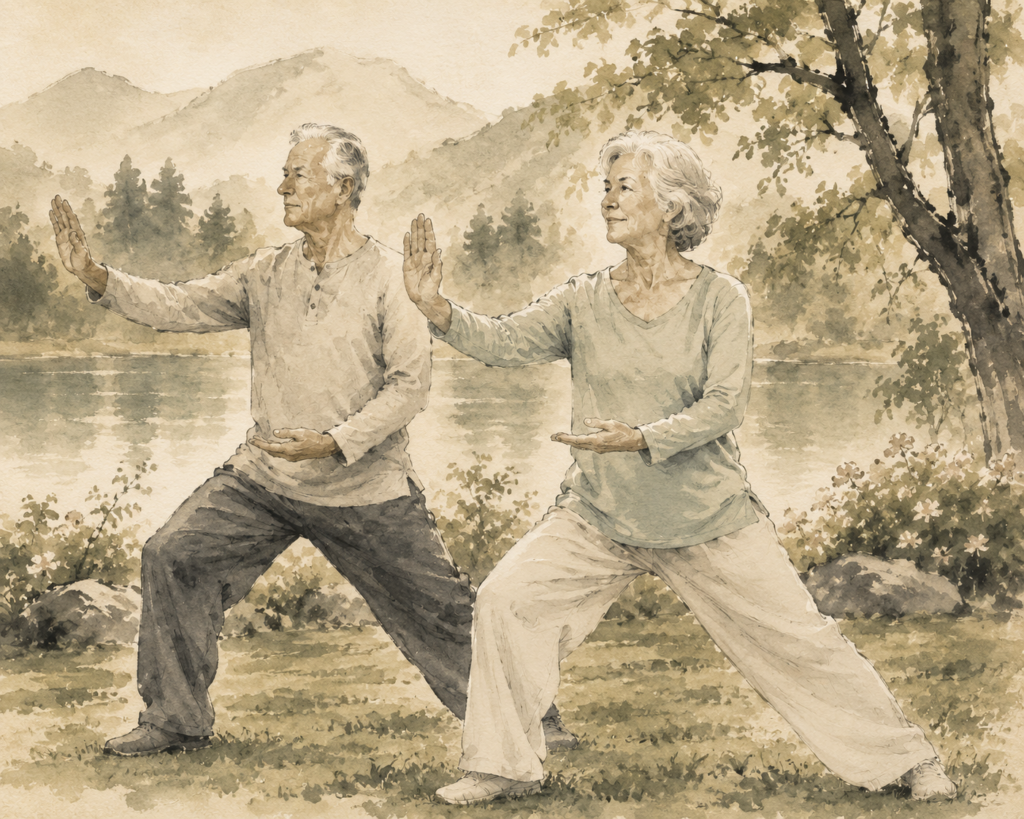
Tai Chi and Qi Gong encourage slow, controlled movement combined with relaxed breathing and body awareness.
Many people find they help them:
- reduce stiffness
- improve posture and balance
- move more confidently
- release unnecessary muscular tension
- maintain gentle mobility during recovery
- feel calmer and more relaxed
The emphasis is always on moving comfortably rather than stretching aggressively or forcing movements that increase pain.
What Does the Research Say?
Research into Tai Chi for low back pain has shown encouraging results, with studies suggesting improvements in pain, physical function and quality of life for some people. Although there is less research specifically on sciatica, the gentle, adaptable nature of Tai Chi makes it suitable for many people as they recover and regain confidence in movement.
Tai Chi and Qi Gong should be viewed as complementary practices that support overall wellbeing rather than treatments for the underlying cause of sciatica.
You can explore the evidence further in our Research & Evidence section.
Adapting Practice
Every experience of sciatica is different.
Depending on your symptoms, you may choose to:
- make movements smaller
- reduce the amount of weight placed on one leg
- practise seated for part of a session
- take more frequent breaks
- avoid movements that increase pain
- gradually increase movement as symptoms improve
Listening to your body and progressing at your own pace is far more important than completing every movement.
When to Seek Advice
Most people can enjoy adapted Tai Chi or Qi Gong safely once serious causes of pain have been excluded.
If your pain is severe, getting worse, follows a significant injury or is accompanied by weakness or changes in bladder or bowel function, seek medical advice before continuing with exercise.
If you’re unsure how to begin, look for a class where movements can be adapted to your individual needs.
Regaining Confidence in Movement
Recovering from sciatica isn’t only about reducing pain.
It’s also about rebuilding confidence.
Many people become worried that every movement might make things worse. Tai Chi and Qi Gong encourage a different approach—moving slowly, paying attention to how your body responds and gradually rediscovering what feels comfortable.
Over time, this can help replace fear with trust, allowing movement to become something that supports recovery rather than something to avoid.