Health Conditions
Living with High Blood Pressure
High blood pressure, also known as hypertension, is one of the most common long-term health conditions in the UK. Many people have no symptoms and only discover they have high blood pressure during a routine health check.
Although it often goes unnoticed, high blood pressure increases the risk of heart disease, stroke, kidney disease and other health problems if left untreated.
The good news is that there are many ways to help manage blood pressure, including medication where appropriate, healthy lifestyle choices and regular physical activity.
Tai Chi and Qi Gong offer a gentle, accessible form of movement that many people find enjoyable and sustainable over the long term.
Understanding High Blood Pressure
Blood pressure is the force of blood pushing against the walls of your arteries as your heart pumps.
It’s natural for blood pressure to rise and fall throughout the day depending on what you’re doing, how you’re feeling and your general health.
High blood pressure occurs when this pressure remains consistently higher than it should be over time.
Often there are no obvious symptoms, which is why hypertension is sometimes called the “silent killer.”
Regular blood pressure checks are the only reliable way of knowing whether your blood pressure is within a healthy range.
Why Movement Matters
Regular physical activity is one of the lifestyle changes most commonly recommended for people living with high blood pressure.
Movement helps to support cardiovascular health in many ways, including improving circulation, maintaining a healthy weight and supporting overall wellbeing.
The best form of exercise is often the one you enjoy and can continue practising regularly.
Tai Chi and Qi Gong may be particularly appealing because they are:
- gentle and low impact
- suitable for many ages and abilities
- adaptable to different fitness levels
- enjoyable to practise regularly
- supportive of relaxation as well as physical activity
How Tai Chi and Qi Gong May Help
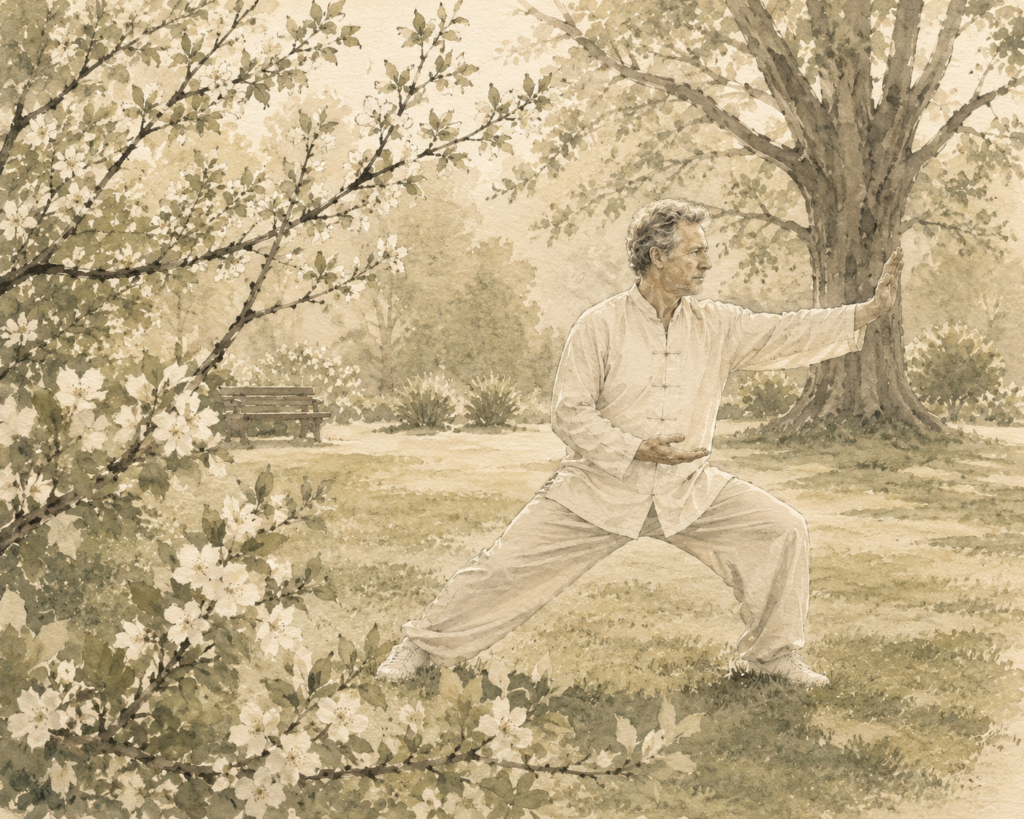
Tai Chi and Qi Gong combine slow, flowing movement with natural breathing and mindful attention.
Together, these elements may help people living with high blood pressure by encouraging:
- regular physical activity
- improved balance and coordination
- relaxation
- reduced physical tension
- greater body awareness
- confidence in movement
Many people also find that practising Tai Chi or Qi Gong provides valuable time away from the pressures of everyday life.
What Does the Research Say?
Research into Tai Chi and blood pressure has grown steadily over the past two decades.
Several systematic reviews and meta-analyses suggest that regular Tai Chi practice may help reduce blood pressure in some people, particularly when practised consistently over time alongside other healthy lifestyle measures. Researchers have also explored its effects on cardiovascular fitness, balance and quality of life.
Although the findings are encouraging, Tai Chi should be viewed as a complementary approach rather than a replacement for medication or other treatment recommended by your healthcare team.
You can explore the evidence in more detail in our Research & Evidence section.
A Holistic Approach to Heart Health
Managing blood pressure is about more than a single number.
It often involves looking at the whole picture, including:
- regular movement
- healthy eating
- good sleep
- managing stress
- reducing smoking and excessive alcohol consumption where appropriate
- taking prescribed medication
Tai Chi and Qi Gong can sit comfortably alongside these other approaches as part of an overall healthy lifestyle.
Is Tai Chi Suitable for Everyone?
Most people with well-managed high blood pressure can safely enjoy Tai Chi and Qi Gong.
If your blood pressure is very high, poorly controlled or you have recently experienced a heart attack, stroke or other cardiovascular event, it’s important to seek advice from your GP or specialist before beginning a new exercise programme.
Movements can often be adapted to suit individual needs and abilities.
A Sustainable Way to Stay Active
One of the greatest challenges with exercise is finding something you enjoy enough to continue.
Tai Chi and Qi Gong aren’t about pushing harder or exercising to exhaustion.
Instead, they encourage steady, enjoyable movement that many people continue practising for years.
It’s this regular, sustainable approach that may contribute to long-term health and wellbeing.
Continue Exploring
You may also enjoy:
- Heart Health
- Research & Evidence
- About Tai Chi
- About Qi Gong
- Embodied Wellbeing