About Tai Chi
Tai Chi is a gentle practice that combines slow, flowing movement with relaxed breathing and focused attention. Originally developed as a Chinese martial art, it is now practised throughout the world to support health, wellbeing and personal development.
Although the movements appear graceful and unhurried, Tai Chi is much more than a form of exercise. It develops balance, coordination, strength, body awareness and mental focus, while encouraging a calmer, more mindful way of moving.
People come to Tai Chi for many different reasons. Some want to improve their balance or mobility. Others are looking for a gentler way to stay active, manage stress or simply enjoy learning a new skill. Whatever the reason, Tai Chi offers a practice that can continue to evolve throughout life.
The Origins of Tai Chi
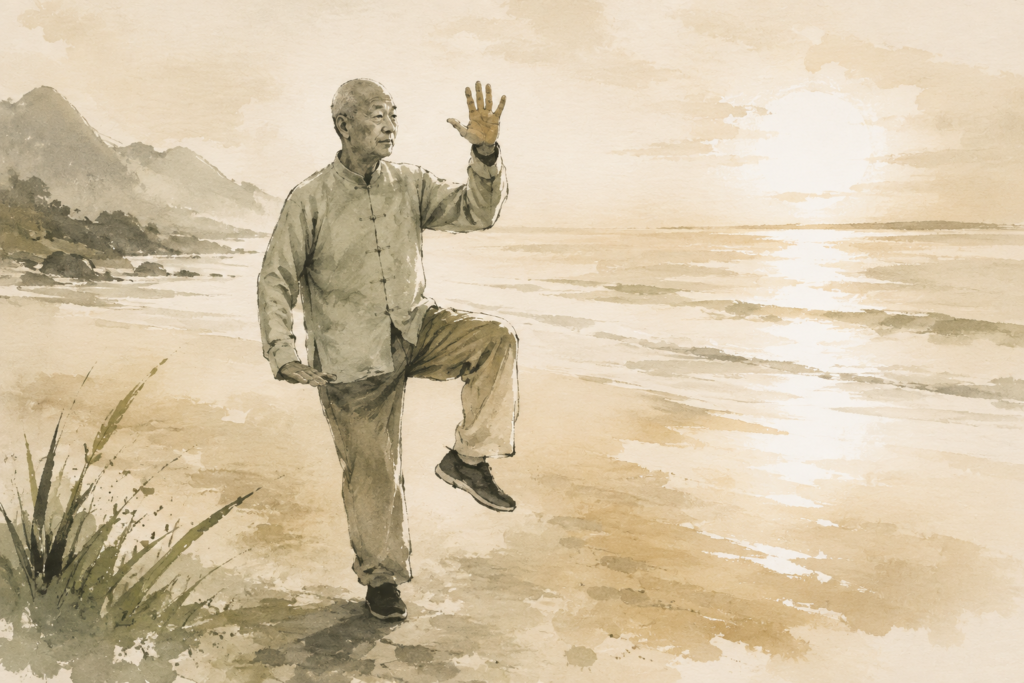
Tai Chi, or Taijiquan, originated in China several centuries ago. It developed as an internal martial art, combining self-defence with philosophical ideas about harmony, balance and the natural world.
Over time, Tai Chi evolved beyond its martial origins. While many people still study its traditional martial applications, it is now equally valued as a practice that supports health, relaxation and overall wellbeing.
Today, Tai Chi is practised by millions of people worldwide in community groups, healthcare settings, parks and homes.
Tai Chi Comes to the West
Although Tai Chi has been practised in China for centuries, its introduction to Europe and North America is a much more recent story.
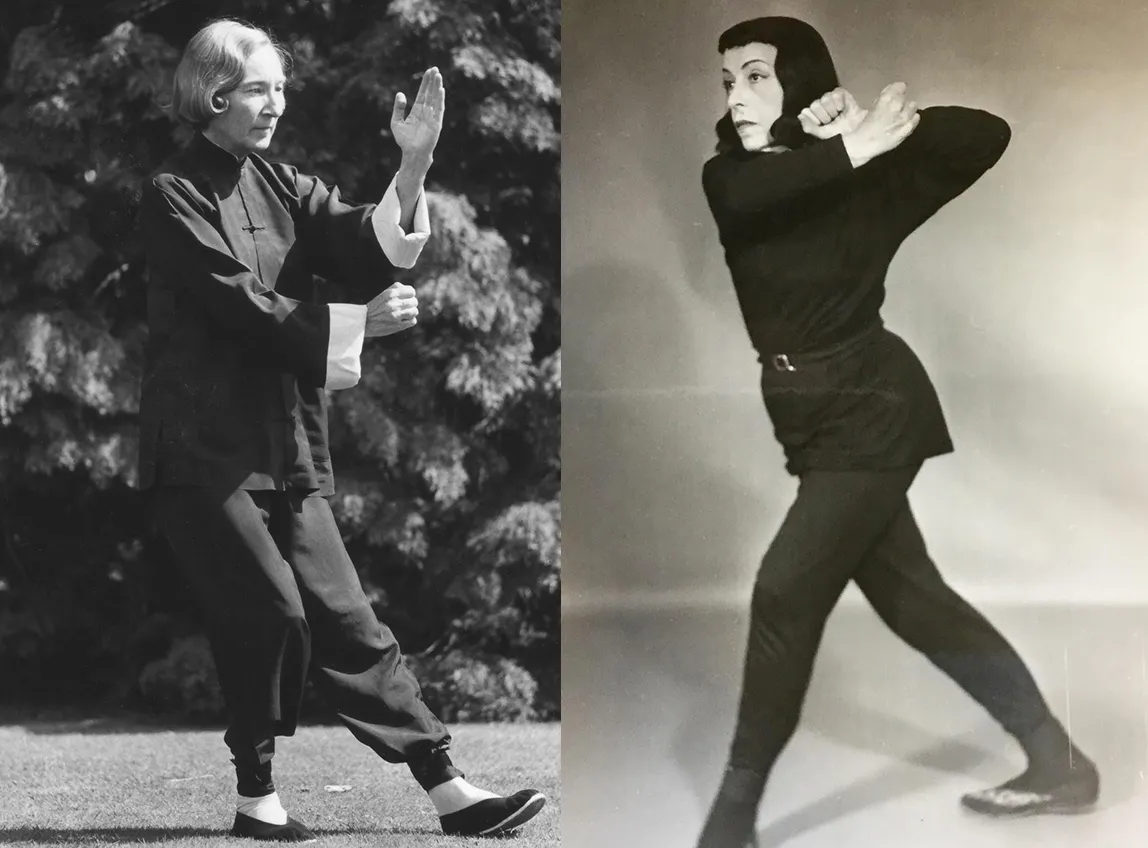
During the twentieth century, a small number of pioneering teachers helped introduce Tai Chi to Western audiences. Among them were two remarkable women, Gerda Geddes and Sophia Delza, whose backgrounds in dance challenged the common perception that Tai Chi was solely a martial art. They recognised its potential as a practice that could support health, awareness and personal growth long before these ideas became widely accepted.
What Makes Tai Chi Different?
Unlike many forms of exercise, Tai Chi is not about speed, effort or pushing your body to its limits. Instead, it encourages you to:
- move slowly and continuously
- maintain a relaxed, upright posture
- coordinate movement with natural breathing
- develop balance and stability
- cultivate awareness of how your body moves
The emphasis is not on performing movements perfectly but on moving with comfort, control and attention. This combination of movement and awareness is one of the reasons Tai Chi is often described as “meditation in movement.”
The Principles of Tai Chi
Although there are several different styles of Tai Chi, they all share a number of fundamental principles.
Relaxation: Tai Chi encourages unnecessary muscular tension to soften, allowing movement to become easier and more efficient.
Balance: Through careful weight shifting and coordinated movement, Tai Chi develops stability, confidence and balance in everyday life.
Alignment: Gentle attention to posture helps the body move more comfortably and efficiently.
Mindful Awareness: Rather than moving automatically, Tai Chi invites us to notice how we move, breathe and respond in the present moment.
Flow: Movements connect smoothly from one to another, creating a sense of continuity and ease.
These principles extend beyond practice, often influencing how people stand, walk and move in everyday life.
Tai Chi Styles
Over the centuries, several distinct styles of Tai Chi have developed.
The five traditional family styles are:
- Chen
- Yang
- Wu
- Wu (Hao)
- Sun
Each style has its own character while sharing the same underlying principles.
At Movement In Mind, we teach Yang Style and Sun Style, both of which are particularly well suited to supporting health and wellbeing.
Yang Style is known for its flowing, expansive movements and is the most widely practised style throughout the world.
Sun Style combines smooth, agile stepping with an upright posture and is often appreciated for its accessibility, particularly by older adults and people living with long-term health conditions.
Learning Tai Chi
Tai Chi is learnt gradually.
Rather than trying to memorise a long sequence of movements, beginners start by exploring the fundamental principles of posture, balance, weight transfer and relaxed movement.
As confidence grows, individual movements become connected into flowing sequences known as forms.
Learning takes place through regular practice and gentle repetition. Each time you practise, movements become a little more familiar, and your understanding continues to deepen.
There is no finish line in Tai Chi. Even experienced practitioners continue refining the same movements throughout their lives.
Tai Chi and Health
Today, Tai Chi is practised by people of all ages and abilities.
Many enjoy it as a gentle way of maintaining mobility, improving balance, developing strength and supporting overall wellbeing.
Research into Tai Chi has grown considerably in recent decades, with studies exploring its role in healthy ageing, falls prevention, long-term health conditions and mental wellbeing.
Tai Chi is not a replacement for medical care, but it can often complement other approaches to supporting health and quality of life.
You can learn more in our Health Conditions and Research & Evidence sections.
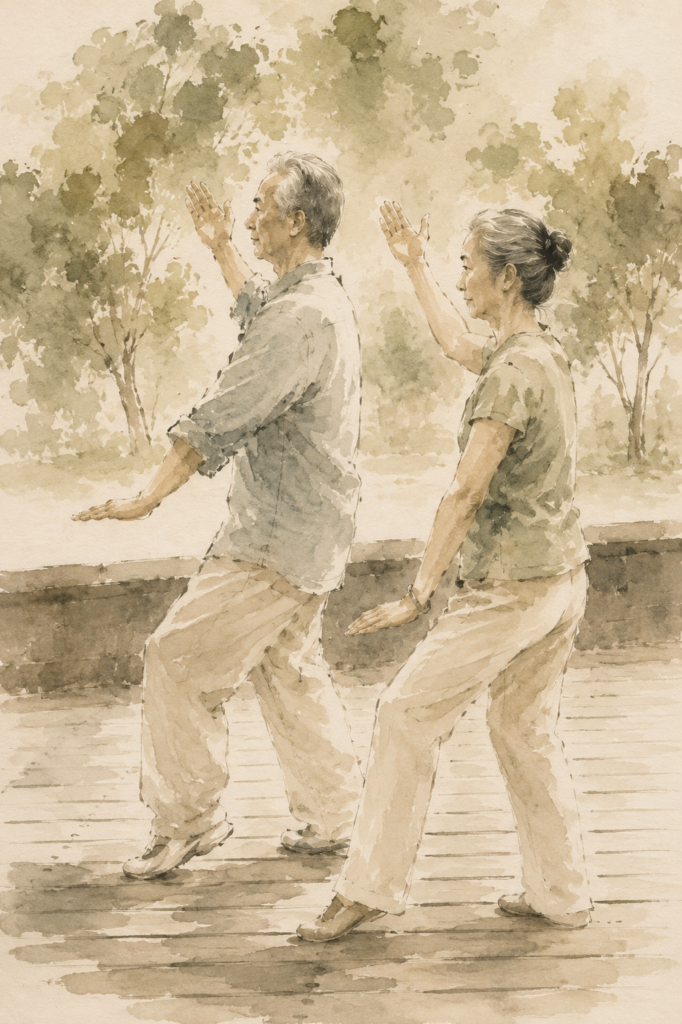
Tai Chi and Qi Gong
Tai Chi and Qi Gong share many principles, including mindful movement, relaxed breathing and body awareness, but they are different practices.
Qi Gong generally consists of individual exercises or shorter sequences that are repeated to develop coordination, breathing and awareness.
Tai Chi combines these same qualities within longer choreographed forms that evolved from martial traditions.
Many people enjoy practising both, finding that they complement one another beautifully.
A Practice for Life
One of the reasons Tai Chi has endured for centuries is that it continues to offer something new, whatever your age or experience.
Some people begin to improve their balance.
Others hope to stay active as they grow older.
Some are simply looking for a quieter, more mindful way to move.
Over time, many discover that Tai Chi is about much more than learning a sequence of movements. It becomes a way of cultivating patience, awareness and a greater sense of ease in everyday life.
There is always more to learn, not because the practice becomes more complicated, but because our understanding continues to deepen.
Continue Exploring
If you’d like to learn more about Tai Chi, you may enjoy exploring:
- Tai Chi Styles – Discover the characteristics of the five major styles and why we teach Yang and Sun Style.
- Learning Tai Chi – Find out what to expect as a beginner and how Tai Chi is learnt over time.
- About Qi Gong – Explore the similarities and differences between Tai Chi and Qi Gong.
- Embodied Wellbeing – Learn how movement, awareness and wellbeing are closely connected.
- Health Conditions – Discover how Tai Chi and Qi Gong can be adapted for a range of long-term health conditions.
- Research & Evidence – Read accessible summaries of current research into Tai Chi and Qi Gong.