
Health Conditions
Living with Hip Pain
Hip pain can affect almost every aspect of daily life.
Walking, climbing stairs, getting in and out of a chair, turning in bed or simply standing for longer periods can become uncomfortable and tiring. Over time, many people begin to move less, either because movement is painful or because they worry about making things worse.
This is an understandable response.
However, reducing movement completely can often lead to increased stiffness, weaker muscles and a loss of confidence.
Tai Chi and Qi Gong offer a gentle, adaptable way to keep moving, helping many people maintain mobility, balance and confidence while working within their own comfort.
Understanding Hip Pain
Hip pain isn’t a condition in itself but a symptom with many possible causes.
Common causes include:
- osteoarthritis
- bursitis
- tendon or muscle problems
- previous injury
- recovery following hip replacement surgery
- referred pain from the lower back
The right treatment depends on the underlying cause, so it’s important to seek medical advice if your pain is severe, persistent or has developed suddenly.
For many people, regular gentle movement forms an important part of managing symptoms alongside other treatments recommended by their healthcare team.
Why Gentle Movement Matters
When movement becomes painful, it’s natural to become more cautious.
Yet our joints are designed to move.
Appropriate movement helps to:
- maintain joint mobility
- strengthen the muscles that support the hip
- improve balance
- reduce stiffness
- make everyday activities easier
The aim isn’t to push through pain or force large movements.
Instead, it’s about finding comfortable, sustainable ways to keep moving.
How Tai Chi and Qi Gong May Help
Tai Chi and Qi Gong are particularly well suited to people living with hip pain because they encourage slow, controlled movement that can usually be adapted to individual needs.
Many people find they help them:
- move with greater confidence
- improve balance and stability
- maintain flexibility
- strengthen supporting muscles
- improve posture
- reduce unnecessary tension
- feel more relaxed while moving
Rather than focusing on performance, these practices encourage awareness of how movement feels, allowing each person to work within their own comfortable range.
What Does the Research Say?
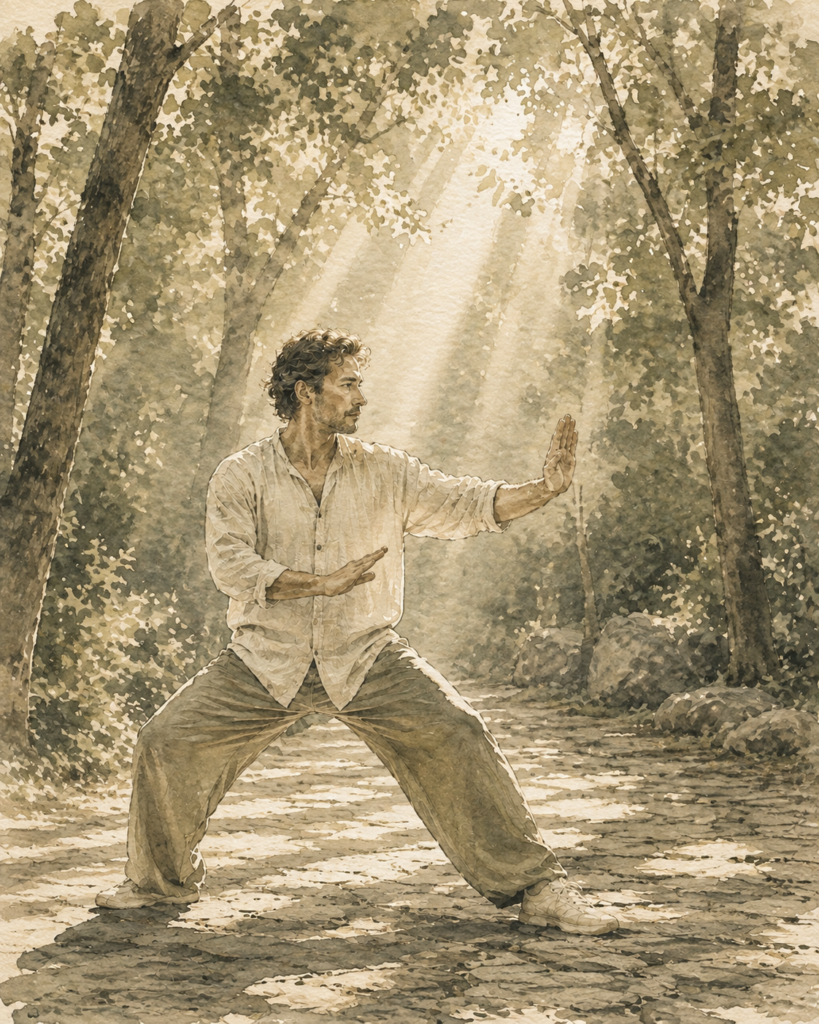
Research into Tai Chi has shown encouraging results for conditions that commonly cause hip pain, particularly osteoarthritis.
Studies suggest regular practice may help improve physical function, balance, mobility and quality of life. Some people also report reductions in pain and increased confidence in everyday movement.
As with all research, responses vary between individuals, and Tai Chi should be viewed as a complementary approach alongside appropriate medical care and rehabilitation rather than a replacement for it.
You can explore the evidence further in our Research & Evidence section.
Adapting Practice
One of the greatest strengths of Tai Chi and Qi Gong is their adaptability.
Depending on your needs, you might:
- reduce the size of movements
- shorten your practice sessions
- use a chair for support
- remain seated for part of the practice
- avoid movements that increase pain
- gradually increase your range of movement as confidence grows
Listening to your body and progressing gradually is far more important than trying to achieve large or perfect movements.
After Hip Replacement Surgery
Many people ask whether they can practise Tai Chi after a hip replacement.
Once you’ve completed the initial stages of recovery and your healthcare team has advised that it is appropriate, Tai Chi can often be adapted to support balance, mobility and confidence.
During the early stages of recovery, it’s important to follow the advice of your surgeon and physiotherapist, particularly regarding movements that may need to be avoided while the joint heals.
Is Tai Chi Right for Everyone?
Most people living with hip pain can enjoy adapted Tai Chi or Qi Gong safely.
If your pain has come on suddenly, is accompanied by swelling, fever or an inability to bear weight, or if you’re recovering from surgery, seek advice from your healthcare professional before beginning a new programme.
Moving with Confidence
Living with hip pain doesn’t necessarily mean giving up the activities you enjoy.
For many people, the goal isn’t simply to reduce pain but to regain confidence in movement and continue doing the things that matter to them.
Tai Chi and Qi Gong encourage a gentle, sustainable approach that helps people work with their bodies rather than against them, discovering that comfortable movement is still possible.