
Health Conditions
Balance and Falls Prevention
Staying Steady as We Age
Many people become more concerned about falling as they get older.
A previous fall, changes in balance, reduced confidence or a long-term health condition can all make everyday activities feel less certain. It’s common to start avoiding uneven ground, busy places or activities that once felt easy.
While this is an understandable response, avoiding movement altogether can actually make balance worse over time.
The good news is that balance can often be improved. Regular, appropriate movement helps maintain strength, coordination and confidence, supporting people to stay active and independent for longer.
Tai Chi and Qi Gong are widely recognised as gentle, effective forms of exercise that can play an important role in falls prevention.
Why Does Balance Change?
Good balance relies on several systems working together.
These include:
- muscle strength
- joint mobility
- vision
- the inner ear (vestibular system)
- sensation in the feet and legs
- the brain’s ability to coordinate movement
As we age, or when living with certain health conditions, these systems may not work together as efficiently.
The result can be feeling less steady, walking more cautiously or becoming anxious about falling.
Why Movement Matters
Balance isn’t something we either have or lose.
It’s a skill that can be maintained and improved through regular practice.
Activities that gently challenge balance help the body continue adapting, strengthening the muscles and coordination needed for everyday life.
The aim isn’t to eliminate all risk but to help people move with greater confidence and stability.
Why is Tai Chi So Effective?
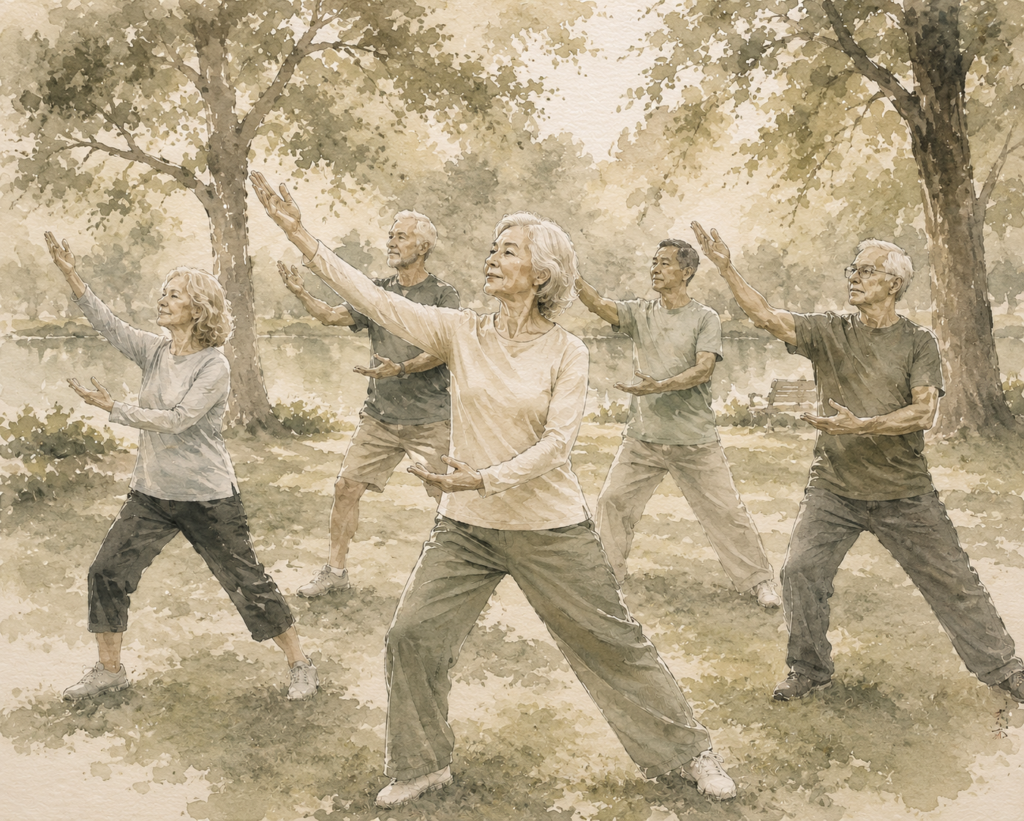
Tai Chi naturally develops many of the skills needed for good balance.
As you practise, you are continually:
- shifting weight from one leg to the other
- improving posture and alignment
- strengthening the muscles that support stability
- coordinating movement
- developing body awareness
- learning to move with control rather than rushing
Unlike repetitive exercises, Tai Chi combines these elements into flowing movements that many people find enjoyable and motivating to continue.
Qi Gong also supports balance through gentle weight shifting, posture and mindful movement, making it an excellent option for people who prefer shorter or simpler movement sequences.
What Does the Research Say?
Tai Chi is one of the most extensively researched forms of exercise for falls prevention.
Research consistently suggests that regular Tai Chi practice can improve balance, functional mobility and confidence while reducing the risk of falls in many older adults. Benefits have also been reported for people living with conditions such as Parkinson’s and after completing falls prevention programmes.
Because of this evidence, Tai Chi is recommended in a number of national and international falls prevention guidelines as one of several effective approaches to improving balance and reducing falls risk.
You can explore the research in more detail in our Research & Evidence section.
Adapting Practice
Everyone’s balance is different.
Tai Chi and Qi Gong can be adapted by:
- using a chair for support
- reducing the size of movements
- practising seated where appropriate
- taking regular breaks
- gradually increasing the amount of standing balance work
Progress comes through regular, comfortable practice rather than attempting difficult movements too quickly.
Building Confidence After a Fall
One of the biggest consequences of a fall is often a loss of confidence.
Many people begin to avoid walking outdoors or participating in activities they once enjoyed because they’re afraid of falling again.
Tai Chi encourages a gradual rebuilding of confidence.
By practising slow, controlled movements in a supportive environment, many people begin to trust their balance again and feel more comfortable moving in everyday life.
Is Tai Chi Suitable for Everyone?
Most people can enjoy adapted Tai Chi or Qi Gong safely, including those who feel unsteady on their feet.
If you’ve experienced frequent falls, significant dizziness or have recently had a serious injury, it’s important to seek advice from your healthcare professional before beginning a new exercise programme.
Look for classes where movements can be adapted and where instructors understand how to support people with different levels of mobility.
Staying Independent
Good balance is about much more than preventing falls.
It’s about continuing to do the things that matter—walking with confidence, getting out into the community, playing with grandchildren, gardening or simply moving around your home without fear.
Tai Chi and Qi Gong offer a gentle, enjoyable way of maintaining these skills, helping many people remain active and independent as they grow older.
Continue Exploring
- Parkinson’s
- Arthritis
- Hip Pain
- Embodied Wellbeing
- Research & Evidence
At Movement In Mind, many of the principles used in our adapted Tai Chi classes draw on evidence-based approaches to improving balance and reducing falls risk. Movements can be adapted for different abilities, with seated and supported options available where needed.