
Health Conditions
Living with Osteoporosis
Being diagnosed with osteoporosis can be worrying.
Many people become concerned about breaking a bone or losing their independence. It’s natural to feel more cautious about movement, especially if you’ve already experienced a fracture or have been told your bones are fragile.
Yet staying active is one of the most important things you can do.
Appropriate movement helps maintain strength, balance and confidence, reducing the risk of falls and supporting you to continue enjoying everyday life.
Tai Chi and Qi Gong offer gentle, adaptable forms of exercise that many people living with osteoporosis find both safe and enjoyable when practised appropriately.
Understanding Osteoporosis
Osteoporosis is a condition that causes bones to become less dense and more fragile, making them more likely to break.
It becomes more common with age, particularly after the menopause, although it can affect anyone.
Often there are no symptoms until a fracture occurs, which is why osteoporosis is sometimes called a “silent condition.”
The most common fractures occur in the wrist, spine and hip.
Treatment may include medication, adequate calcium and vitamin D, weight-bearing exercise and falls prevention strategies.
Osteoporosis becomes more common with age, particularly after the menopause, although it can affect men and younger adults as well.
Why Movement Matters
It may seem surprising, but regular movement is an important part of living well with osteoporosis.
Appropriate exercise can help:
- maintain muscle strength
- improve balance
- support posture
- reduce the risk of falls
- maintain independence
- build confidence in movement
The aim isn’t to protect your bones by avoiding activity, but to choose movements that are both safe and beneficial.
How Tai Chi and Qi Gong May Help
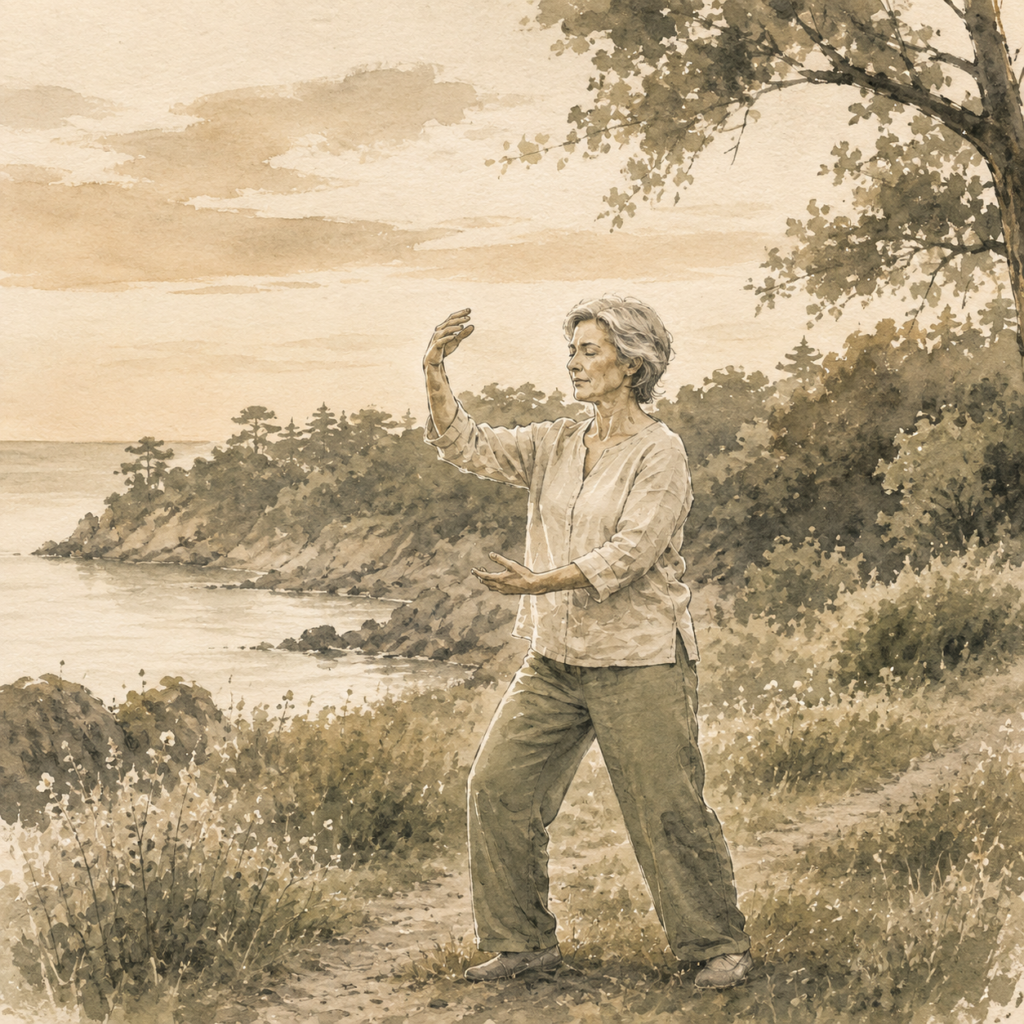
Tai Chi and Qi Gong encourage slow, controlled movement combined with good posture and body awareness.
Many people living with osteoporosis find they help them:
- improve balance and stability
- move with greater confidence
- strengthen the muscles that support everyday movement
- improve coordination
- reduce stiffness
- maintain an active lifestyle
Because movements are slow and adaptable, they can often be modified to suit individual abilities and confidence levels.
What Does the Research Say?
Research suggests that Tai Chi can improve balance, mobility and confidence in older adults, helping to reduce the risk of falls—one of the main causes of fractures in people living with osteoporosis.
Although Tai Chi does not increase bone density in the way that medication or higher-impact weight-bearing exercise may, it supports many of the physical skills needed to remain active and independent.
For this reason, Tai Chi is often recommended as part of a broader approach to osteoporosis management alongside medication, nutrition and other appropriate forms of exercise.
You can explore the research in more detail in our Research & Evidence section.
Practising Safely
Most people living with osteoporosis can enjoy Tai Chi safely, but some movements may need to be adapted.
Good practice includes:
- moving within a comfortable range
- avoiding sudden, forceful twisting movements
- avoiding deep forward bending through the spine where advised
- maintaining good posture
- using a chair or other support if balance is reduced
At Movement In Mind, movements can be adapted to suit different levels of mobility and confidence, with seated and supported options available where appropriate.
Is Tai Chi Suitable for Everyone?
For most people, yes.
If you’ve recently had a fracture, have severe osteoporosis or are unsure which movements are appropriate, speak to your GP, physiotherapist or osteoporosis specialist before beginning a new exercise programme.
An experienced instructor can help adapt movements so you can practise safely while still gaining the benefits of regular activity.
Building Strength and Confidence
Living with osteoporosis isn’t only about protecting your bones.
It’s about maintaining the confidence to continue walking, travelling, gardening, playing with grandchildren and enjoying the activities that give life meaning.
Tai Chi and Qi Gong encourage steady, mindful movement that helps people feel more secure in their bodies and more confident in everyday life.
The goal isn’t perfect movement—it’s maintaining an active, independent life for as long as possible.