Health Benefits of Tai Chi
Why Tai Chi Benefits Health
At first glance, Tai Chi doesn’t look like exercise in the way many people expect. The movements are slow, there is no jumping or running, and you won’t finish feeling exhausted or out of breath.
Yet research continues to show that regular Tai Chi practice can improve strength, balance, flexibility, mobility, mental wellbeing and quality of life for many people.
So what makes it so effective?
The answer lies not in how hard you work, but in how you move.
Movement Matters
Our bodies are designed to move.
Regular movement helps keep muscles active, joints mobile and the cardiovascular system healthy. It also supports healthy bones, circulation, coordination and emotional wellbeing.
When movement becomes limited—whether through illness, pain, injury or simply spending long periods sitting—we can gradually lose strength, flexibility and confidence. Everyday activities such as climbing stairs, getting out of a chair or walking on uneven ground may begin to feel more difficult.
Tai Chi provides a gentle way of restoring movement without placing unnecessary strain on the body.
Gentle Doesn’t Mean Ineffective
Many people have grown up believing that exercise has to be intense to be worthwhile.
While vigorous exercise has many benefits, it isn’t the right choice for everyone. People living with long-term health conditions, recovering from injury or simply returning to exercise often need a different approach.
Tai Chi demonstrates that gentle movement can still challenge the body in meaningful ways.
Rather than pushing harder, Tai Chi encourages you to move with greater awareness, coordination and control. The result is a form of exercise that is both effective and sustainable.
Whole-Body Movement
Unlike exercises that isolate individual muscles, Tai Chi encourages the whole body to work together.
Every movement involves the feet, legs, pelvis, spine, arms and head moving in harmony. As weight shifts from one leg to the other, the body learns to organise itself more efficiently.
Over time this can improve:
- strength
- flexibility
- posture
- coordination
- ease of movement
Instead of thinking about separate body parts, Tai Chi encourages the body to move as an integrated whole.
Balance Begins with Awareness
One of Tai Chi’s greatest strengths is its ability to develop balance.
Balance is about much more than standing on one leg. It depends on the brain, eyes, inner ear, muscles and joints all working together.
Tai Chi improves balance by encouraging slow, controlled weight shifts, mindful stepping and increased awareness of where the body is in space. Practising these movements repeatedly helps develop confidence as well as physical stability.
This is one reason Tai Chi is widely recommended for older adults and people concerned about falls.

Strength Through Control
Tai Chi develops strength in a different way from many gym-based exercises.
The slow movements require muscles to work continuously to support posture, maintain stability and control movement. The legs become stronger through repeated weight transfer, while the muscles of the abdomen and back help support the spine throughout each movement.
Rather than relying on force, Tai Chi develops functional strength that supports everyday activities such as walking, lifting, reaching and standing.
Breathing, Relaxation and the Nervous System
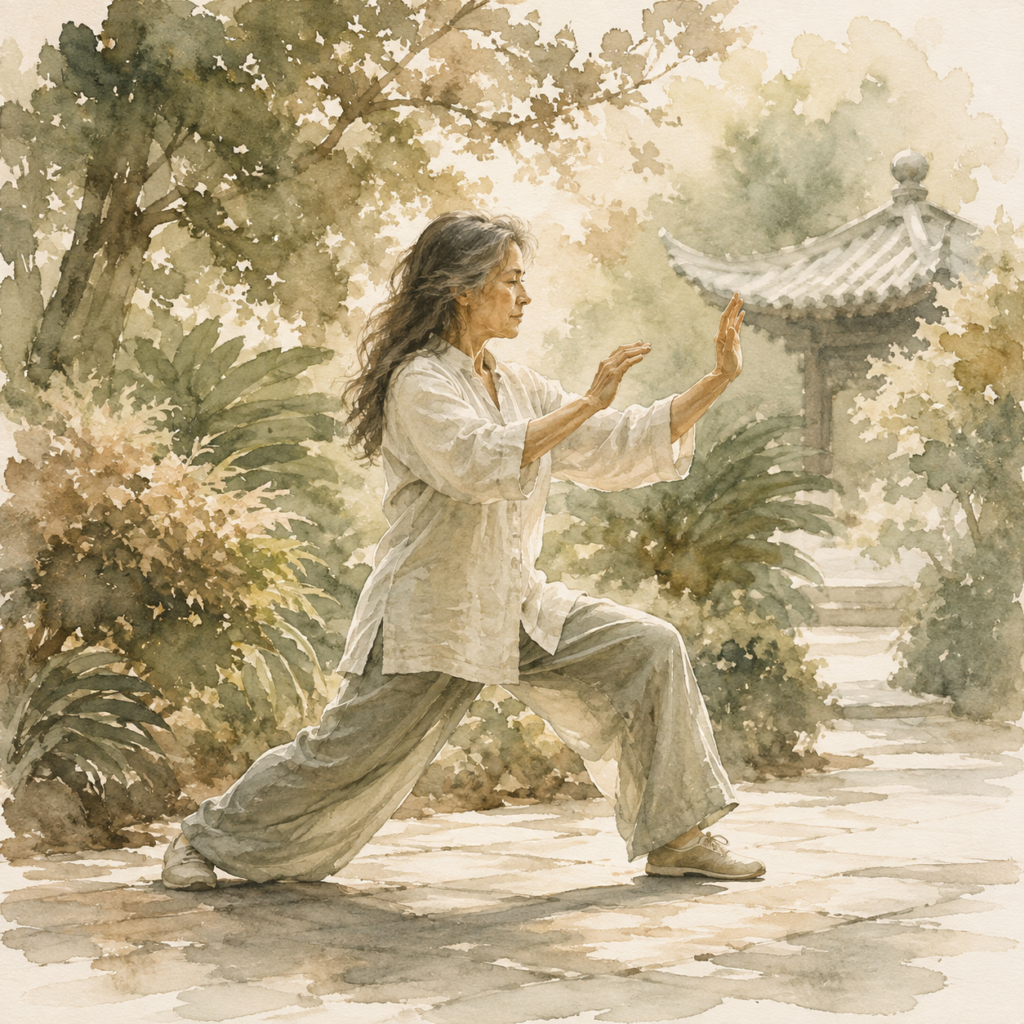
Tai Chi combines movement with relaxed, natural breathing and focused attention.
As the body begins to move more freely, unnecessary muscular tension often starts to reduce. Many people notice that their breathing becomes calmer and deeper, helping them feel more settled both physically and emotionally.
Modern research suggests that practices combining mindful movement and relaxed breathing can help regulate the nervous system, reducing stress and supporting emotional wellbeing.
Many people describe leaving a Tai Chi session feeling calmer, clearer and more grounded than when they arrived.
Body Awareness
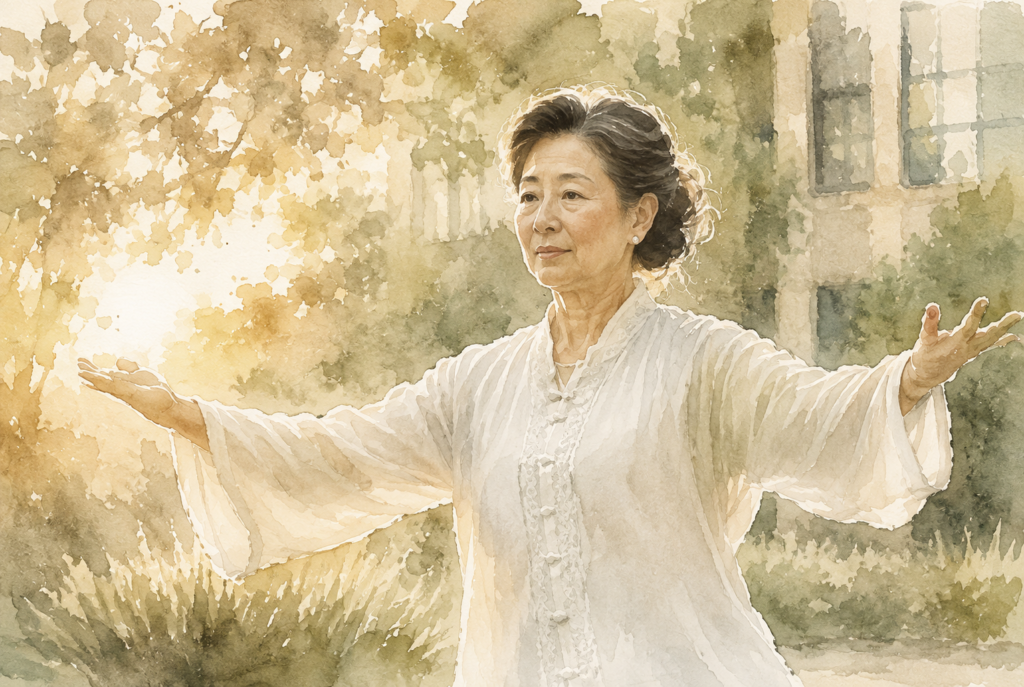
Tai Chi develops something called body awareness—our ability to notice how we move and how our body feels.
As we become more aware of posture, balance and movement patterns, we often begin to move more efficiently in everyday life.
People frequently notice that they:
- stand more comfortably
- walk with greater confidence
- recognise tension before it builds
- recover more easily after losing balance
- feel more connected with their bodies
These changes often happen gradually through regular, mindful practice.
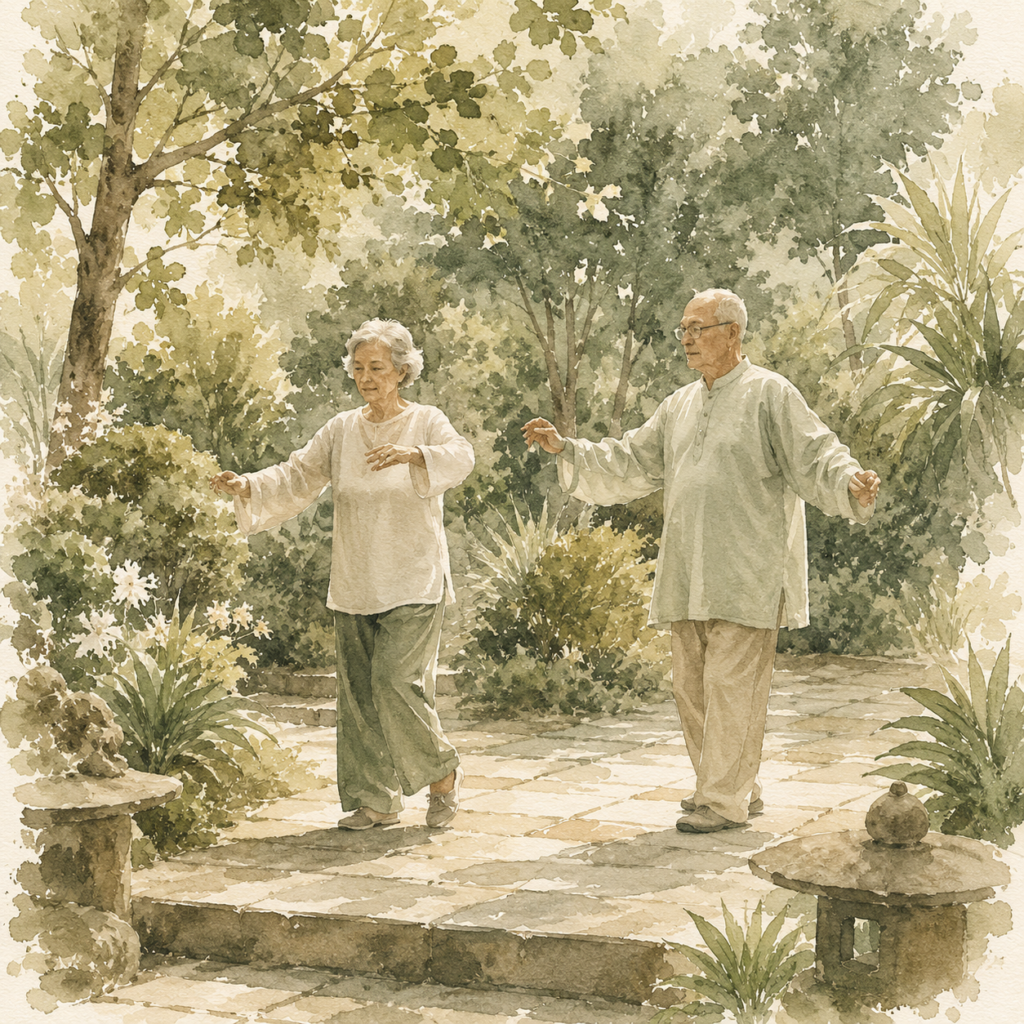
Healthy Ageing
Growing older doesn’t mean we have to stop moving.
In fact, regular movement becomes increasingly important as we age.
Tai Chi provides a safe, adaptable form of exercise that supports many of the physical abilities needed for independent living, including strength, flexibility, coordination and balance.
Because movements can be modified to suit different abilities, many people continue practising Tai Chi throughout later life, adapting the practice as their needs change.

What Does the Research Say?
Research into Tai Chi has grown significantly over the past few decades.
Studies suggest that regular practice may help improve:
- balance and stability
- muscle strength
- flexibility
- mobility
- confidence in movement
- mental wellbeing
- quality of life
Research has also explored the role of Tai Chi in supporting people living with a range of long-term health conditions, including arthritis, Parkinson’s disease, osteoporosis, diabetes and chronic pain.
While Tai Chi is not a replacement for medical treatment, growing evidence suggests it can be a valuable part of a healthy lifestyle and may complement medical care for many people.
A Different Way of Thinking About Exercise
At Movement In Mind, we believe movement should support your health rather than leave you feeling depleted.
Tai Chi isn’t about pushing through pain or striving for perfection. It invites you to listen to your body, work within your own capabilities and gradually develop confidence through regular practice.
Progress is measured not by how hard you push, but by how comfortably you move, how steadily you breathe and how much more at ease you feel in your own body.
For many people, that gentle approach is exactly what makes Tai Chi such a powerful practice for lifelong health and wellbeing.
Continue Exploring
You may also be interested in:
- Tai Chi Styles – Learn about the different styles of Tai Chi and why we teach Yang and Sun Style.
- Tai Chi for Health Conditions – Discover how Tai Chi may support people living with arthritis, osteoporosis, diabetes and other long-term conditions.
- Research & Evidence – Explore the growing body of research into Tai Chi and health.