
Health Conditions
Tai Chi and Respiratory Health
Living with a respiratory condition can affect much more than breathing. Breathlessness, fatigue and reduced confidence can make everyday movement feel more difficult, and it can be tempting to become less active as a result.
Gentle movement can be an important part of maintaining physical function and wellbeing. Tai Chi offers one way of staying active while also developing awareness of breathing, posture and how the body responds to movement.
How Can Tai Chi Help?
Tai Chi combines slow, flowing movement with relaxed breathing and focused attention. Because the movements are gentle and can be adapted, they may be suitable for people who find more vigorous forms of exercise difficult.
Research into Tai Chi and respiratory health, particularly in people living with chronic obstructive pulmonary disease (COPD), suggests potential benefits for physical function and quality of life.
People may experience improvements in areas such as:
- exercise capacity
- balance and mobility
- confidence with movement
- breathlessness during activity
- emotional wellbeing
- quality of life
The evidence is still developing, and Tai Chi should be seen as a complementary form of activity, rather than a treatment for respiratory disease.
Breathing and Movement
When we become breathless, it’s natural to become tense or anxious. We may change the way we move or avoid activity altogether.
Tai Chi offers an opportunity to explore movement at a slower pace.
Rather than forcing the breath or trying to take increasingly deep breaths, the practice encourages comfortable, natural breathing alongside gentle movement.
Over time, this can help develop greater awareness of:
- how you’re breathing
- when you begin to hold your breath
- unnecessary tension
- how your body responds to movement
- when you need to slow down or rest
The aim isn’t to make the lungs work harder. It’s to develop a more comfortable relationship between breathing and movement.
Staying Active When Breathing Is Difficult
One of the challenges of living with a respiratory condition is maintaining physical activity.
It can feel counterintuitive to exercise when movement makes you breathless. Yet becoming increasingly inactive can lead to loss of strength, fitness and confidence, which can make everyday activities more difficult.
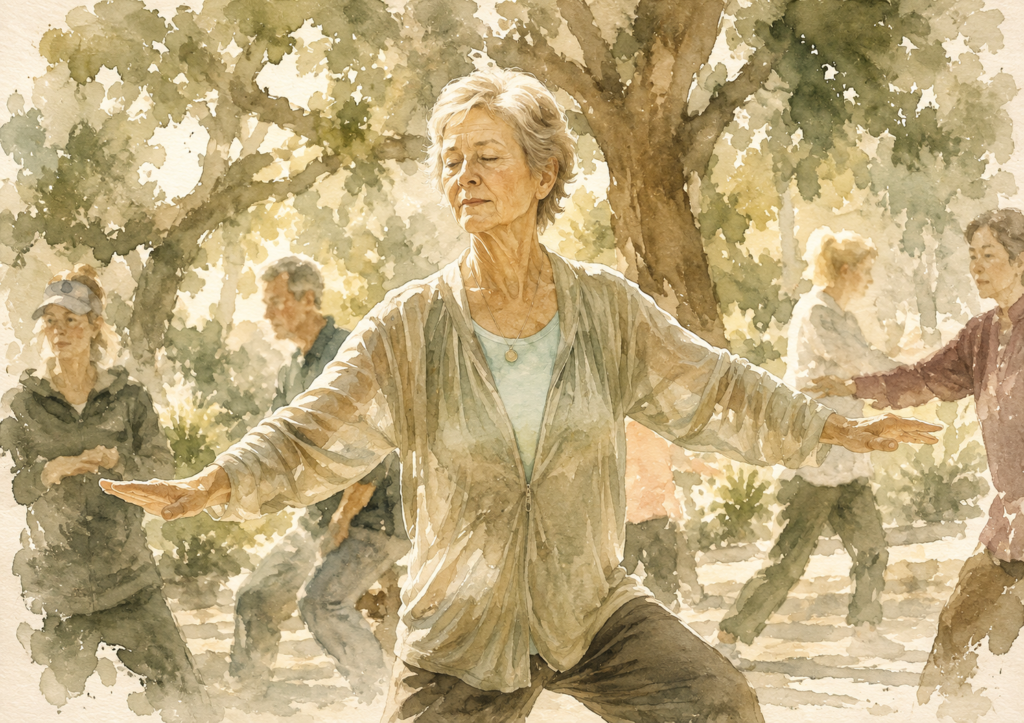
Tai Chi provides a gentle way of continuing to move without demanding high levels of exertion.
Movements can be:
- made smaller
- slowed down
- adapted to your abilities
- practised with seated options where appropriate
- paused whenever you need to rest
There is no need to keep up with anyone else.
The aim is to find a level of movement that feels manageable for you.
Living Well with a Respiratory Condition
Looking after respiratory health involves more than breathing exercises.
Depending on your condition, your healthcare team may recommend:
- appropriate physical activity
- pulmonary rehabilitation
- medication
- stopping smoking
- vaccinations
- maintaining a healthy lifestyle
- strategies for managing breathlessness
Tai Chi can sit alongside these approaches, offering gentle movement and an opportunity to develop confidence, relaxation and body awareness.
It can also provide the enjoyment and social connection that help make regular activity sustainable.

Is Tai Chi Suitable for Me?
Respiratory conditions vary considerably, so there isn’t one approach that suits everyone.
If you have COPD, asthma, pulmonary fibrosis or another respiratory condition, it’s important to follow the advice of your healthcare team about appropriate physical activity.
Tai Chi can be adapted, but you should work within your own limits and stop if you experience symptoms that are concerning or unusual for you.
If you’re unsure whether Tai Chi is appropriate, speak to your GP, respiratory nurse, physiotherapist or other healthcare professional before starting.
A Gentle Way to Keep Moving
Living with a respiratory condition doesn’t mean you have to stop moving.
With appropriate adaptation, Tai Chi can offer a gentle way to maintain mobility, develop confidence and explore the connection between breathing and movement.
The aim isn’t to overcome breathlessness through force. It’s to discover ways of moving that feel comfortable, sustainable and supportive of everyday life.
Explore Further
Read what research tells us about Qi Gong and Respiratory Health and the developing evidence around breathing, movement and respiratory wellbeing.
Learn more about Tai Chi and why its slow, flowing movements can be adapted for different abilities.
Explore other guides to using gentle movement to support wellbeing alongside long-term health conditions.